Game UX · Art Direction · User Research
Forget Me Not
A cosy narrative game where a familiar village slowly stops feeling alive.
Windows · playable prototype
A cosy narrative game where a familiar village slowly stops feeling alive.
Forget Me Not is a 2D top-down narrative exploration game set in a quiet Japanese-inspired village. Playing as Moriko, you meet villagers, complete small quests and collect flowers for your grandmother’s grave. What begins as a cosy routine repeats across three days as familiar conversations, spaces and colours gradually shift — revealing that Moriko is no longer experiencing the village in quite the way she thinks.
I joined the project primarily as Art Director and UI/UX Designer, but my role quickly expanded across game design, production, user research, playtesting and presentation.
Established the art direction, palette, asset specifications and much of the environment and UI foundation.
Worked on controls, interaction logic, world planning, journal and dialogue UI, and how narrative changes were communicated visually.
Planned playtests, documented feedback, coordinated work and helped translate critique into concrete design and pitch changes.
The village begins warm, colourful and inviting. As Moriko becomes increasingly separated from the living world, the same environment gradually loses warmth and shifts toward purple.
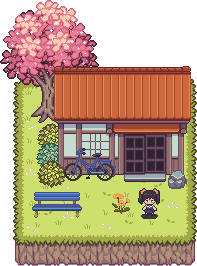
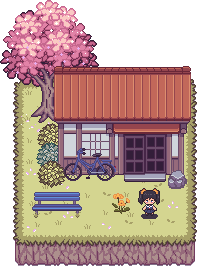
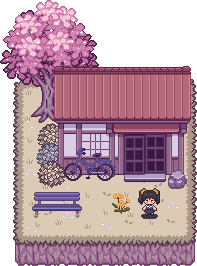
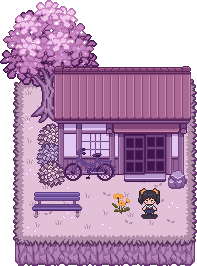
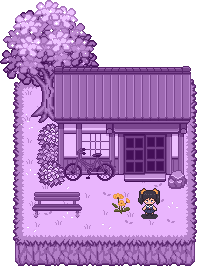
A controlled colour study used to test how the same scene could move from cosy to uncanny without changing its composition.
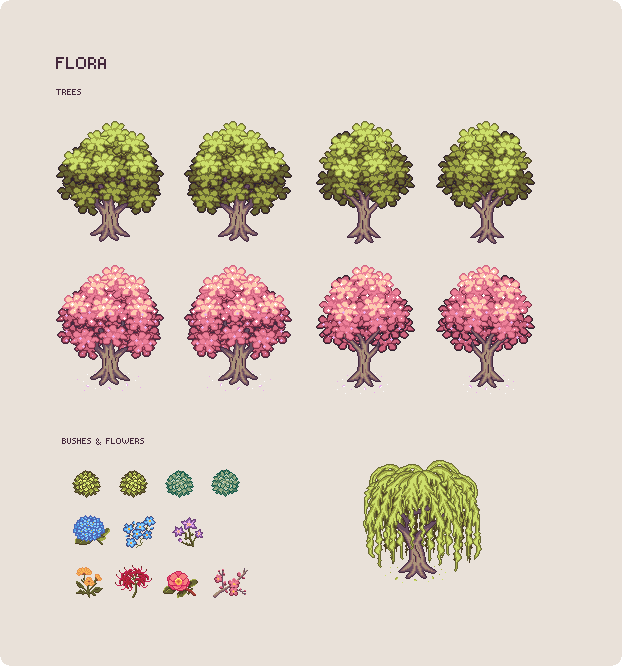
I created reusable terrain, architecture, foliage and world-population assets around the game's tile system, working closely with our programmer as the environment was assembled in Unity.
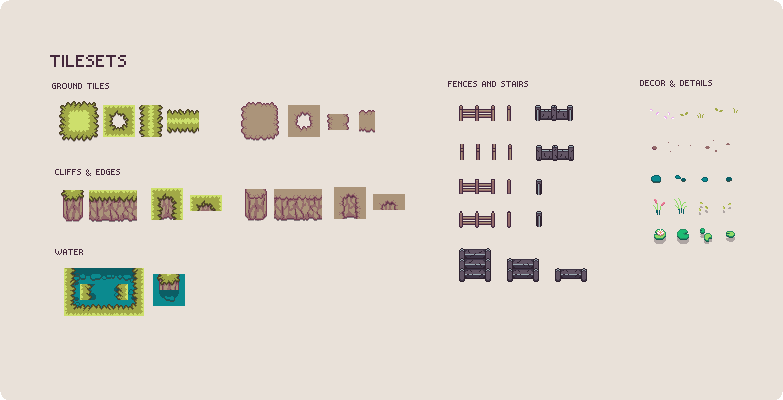
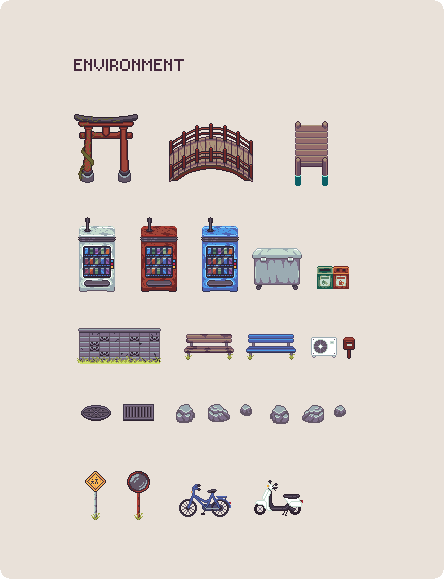
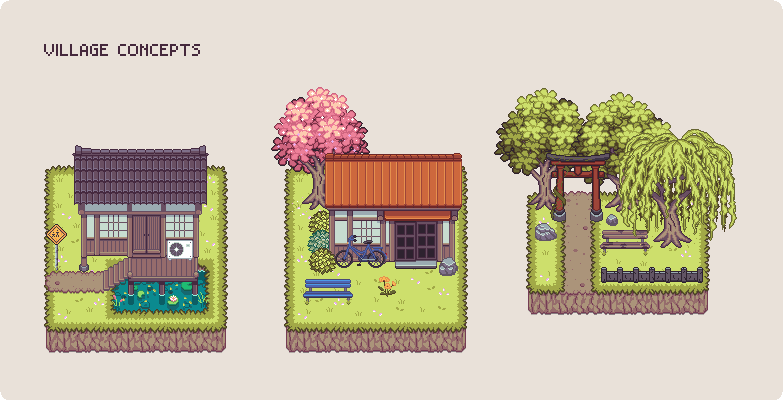
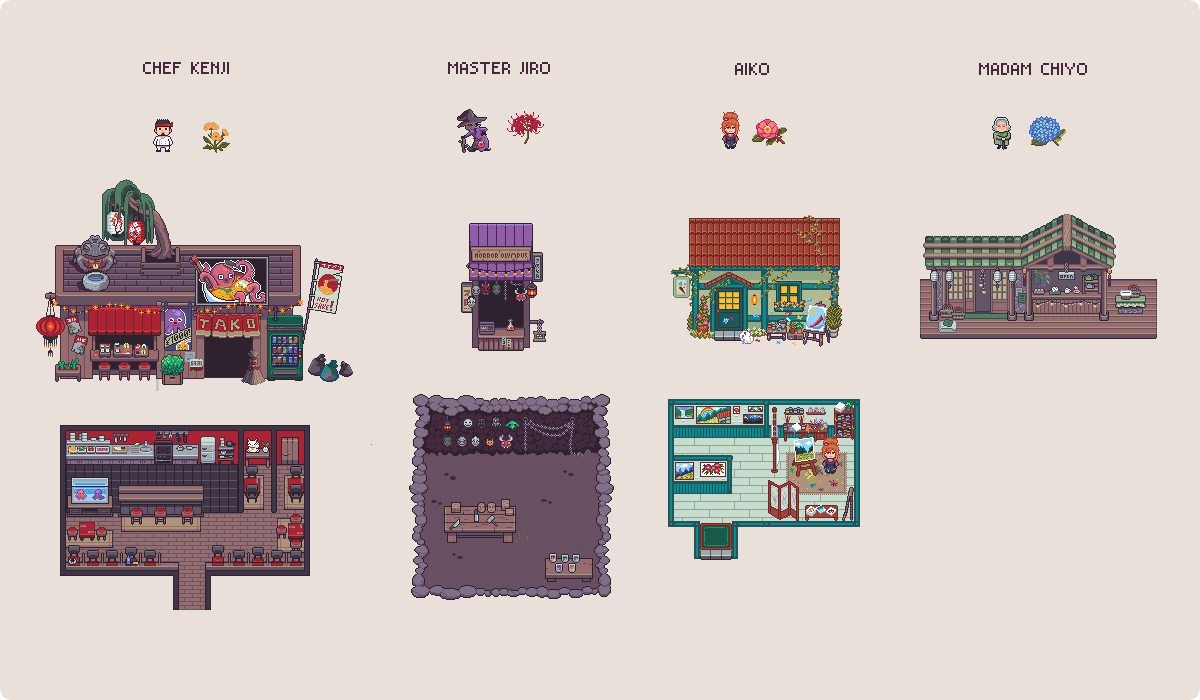
Rather than treating the village as decoration, I reviewed the narrative and quest requirements to identify the environments, props and visual cues each character needed.
The final build brings together exploration, NPC quests, flower collection, UI and the progressively changing village.
I independently planned, executed and evaluated the project’s playtests, combining observation with direct player feedback and translating the findings into concrete design changes for the team.
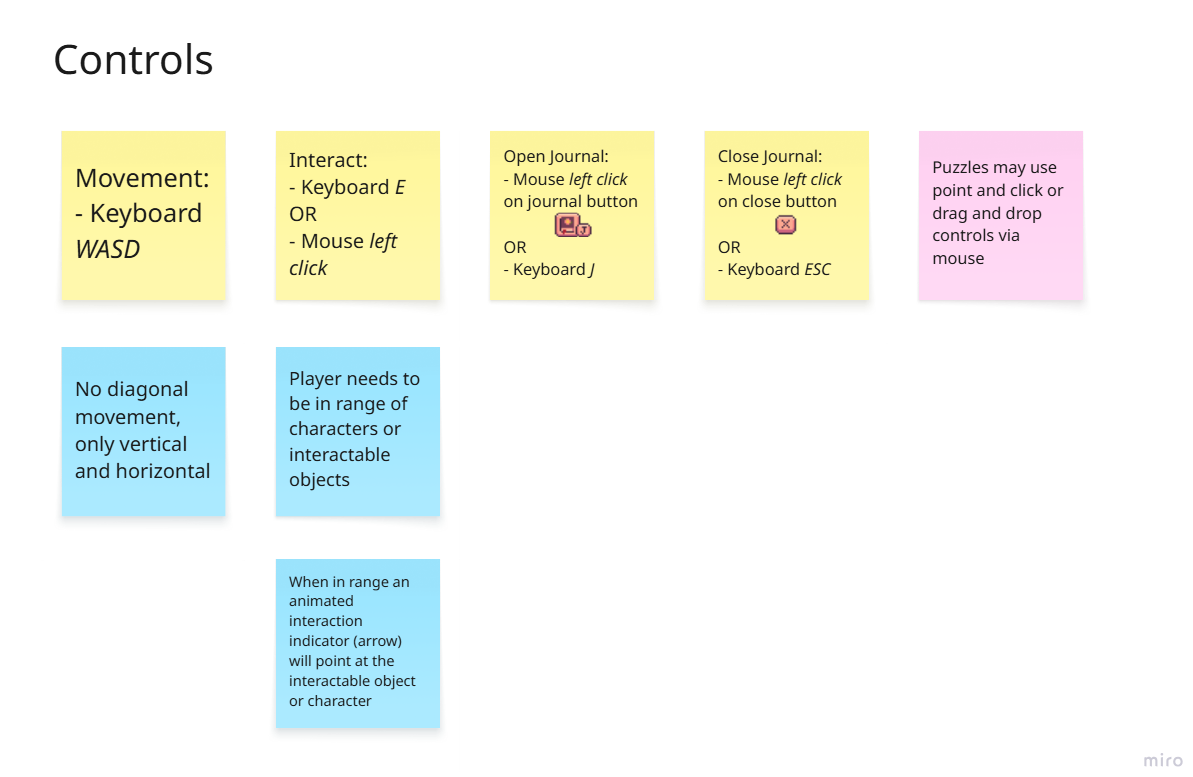
I mapped the intended movement, interaction and journal controls early in development so the team had a shared reference for how players would navigate the experience.
After an industry panel challenged the clarity of our first pitch, I helped restructure the presentation around the player journey and core gameplay loop instead of leading with lore.
I was responsible for all video editing and post-production of the final pitch, including cutting and editing the recorded voice-over. Atticus and I recorded the voice-over together. With the exception of the illustrated team portraits, I also created or researched the visual material used throughout the video.
The pitch itself remains a collaborative team deliverable.